What does it mean to empower the next generation? At the Ohio Energy Project (OEP), the answer is simple: start with education, fuel it with curiosity, and let it ripple outward. But to truly understand the scale of that impact, let’s take a look at the numbers, and put them into perspective.
57,308
That’s a big number on its own. In dollars, it could be a nice down payment on a home. In people, it would be fans in the seats at the average MLB game, or the approximate population of Manhattan (Kansas, that is). Anyway, you slice it, it’s a big number.
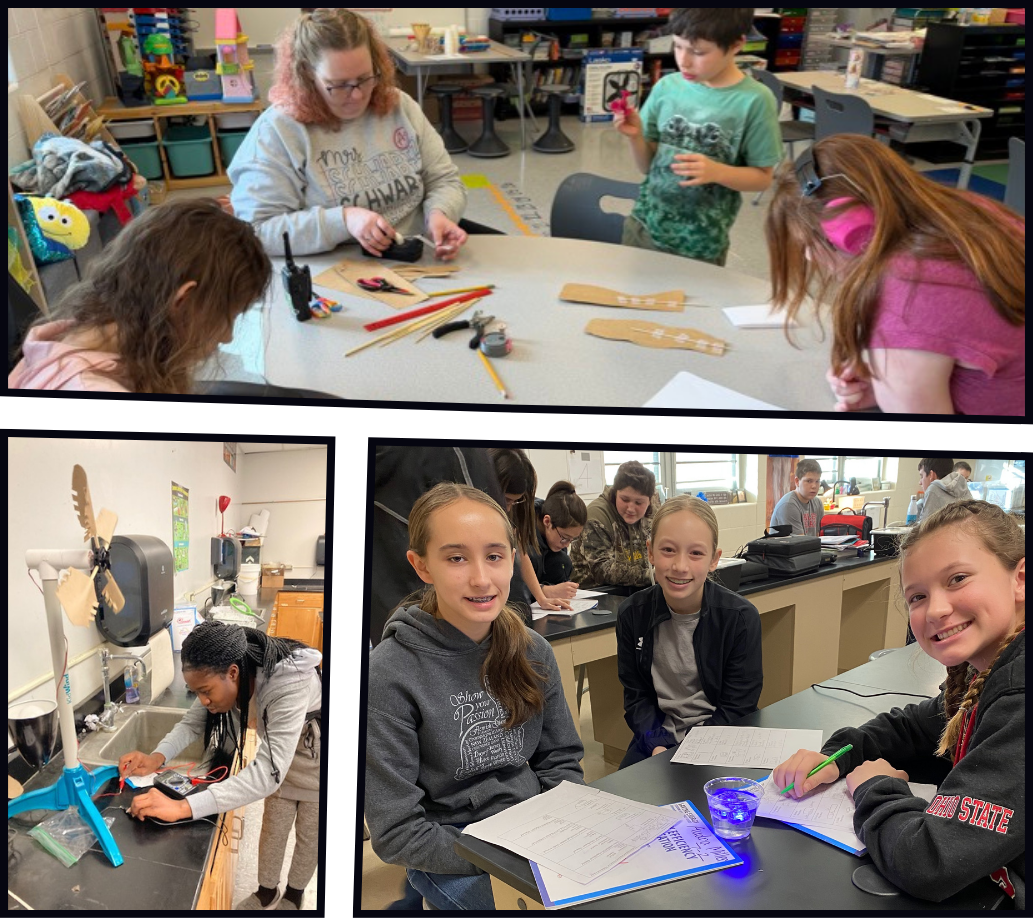
So, how many students have been impacted this year by OEP’s programming this year? You guessed it…57,308! That’s how many young minds have been engaged in hands-on energy education through OEP. It’s more than a single day’s lesson. It’s a movement.
If each of those 57,308 students completed just one energy audit at home (a grass-roots mission that OEP often inspires), then that’s over 57,000 homes becoming more energy aware and likely more efficient. Multiply that by the average energy savings from simple behavioral changes (about $100 per year per home), and you’re looking at an estimated $5.7 million in potential household savings. That’s not just educational impact. That’s economic and environmental impact, rooted in awareness and action.
1,189
If we’re talking about offices, you’d need a 100-story building to accommodate them. If you were reading a book a week, it would take almost 23 years to get through them. But this is how many teachers were assisted by OEP curriculum/educational supplies in Ohio this year…yes, 1,189 strong!
Educators are the ultimate force multipliers. A single teacher, equipped with the right tools and passion, can ignite curiosity in hundreds of students over the course of a career. At OEP, these teachers don’t just get lesson plans, they get lab kits, real-world data, utility partnerships, and the confidence to lead student-driven projects that stretch far beyond the classroom.
Consider this: If each teacher leads a classroom of 25 students, and they each teach five sections per day, that’s nearly 150,000 impressions each day with energy-related content. It’s the kind of reach that’s hard to match, and hard to measure in anything other than long-term change.
1,018
If this were cars in a traffic jam, it would stretch over four miles! It could also be the number of unopened emails in my inbox…but what we’re talking about is the number of schools across Ohio that have been touched by OEP’s energy programs. That’s roughly one out of every three public and private schools in the state. It means this isn’t a niche program; it’s a project with statewide impact.
Think of it in terms of geography: If each school participated in a walk-a-thon around its community to raise awareness about energy conservation, the total collective distance could easily surpass 100,000 miles – enough to circle the globe four times. These schools don’t just represent buildings. They represent hubs of community engagement, family education, and local action.
These aren’t just statistics, they are stories. They’re lightbulb moments (literally and figuratively) in science classrooms across Ohio. And when we start to equate these numbers to real-world equivalents, their significance becomes even more clear.
A Human-Centered Energy Future
What makes OEP’s impact so powerful is that it doesn’t stop at kilowatt-hours saved or carbon avoided. It’s about people. Students who now understand how their light switch connects to a power grid. Teachers who integrate sustainability into history and math. Parents who hear about phantom loads from their kids and make a change.
In a world racing toward energy efficiency, programs like OEP don’t just prepare the next generation of engineers, scientists, and innovators. They build informed citizens. They plant the seeds for a culture where energy is not just a commodity, it’s a shared responsibility.
The future of energy education in Ohio is bright. And it starts in our classrooms.
By John Ely : OEP Board Vice President